

Minoan Ecstatic Postures: The Realm of the Dead
An intriguing look at ancient Mediterranean shamanism

This is one of a long-term series of posts about Ariadne’s Tribe inclusive Minoan spirituality. Some of these posts, including this one, are revised and updated versions of older articles that I wrote over the course of a decade on the now-defunct Minoan Path blog at Witches & Pagans. All my new Minoan Path blog posts can be found here.
I recently discussed the possibility that modern western culture is ecstasy deprived. This concept resonated with a lot of readers. Then I began an exploration of ecstatic body postures that we use in Ariadne’s Tribe to achieve altered states of consciousness and commune with the divine and the inspirited world. My first stop along that journey was the Minoan salute, a pose many people have seen in Minoan art. It looks like this:
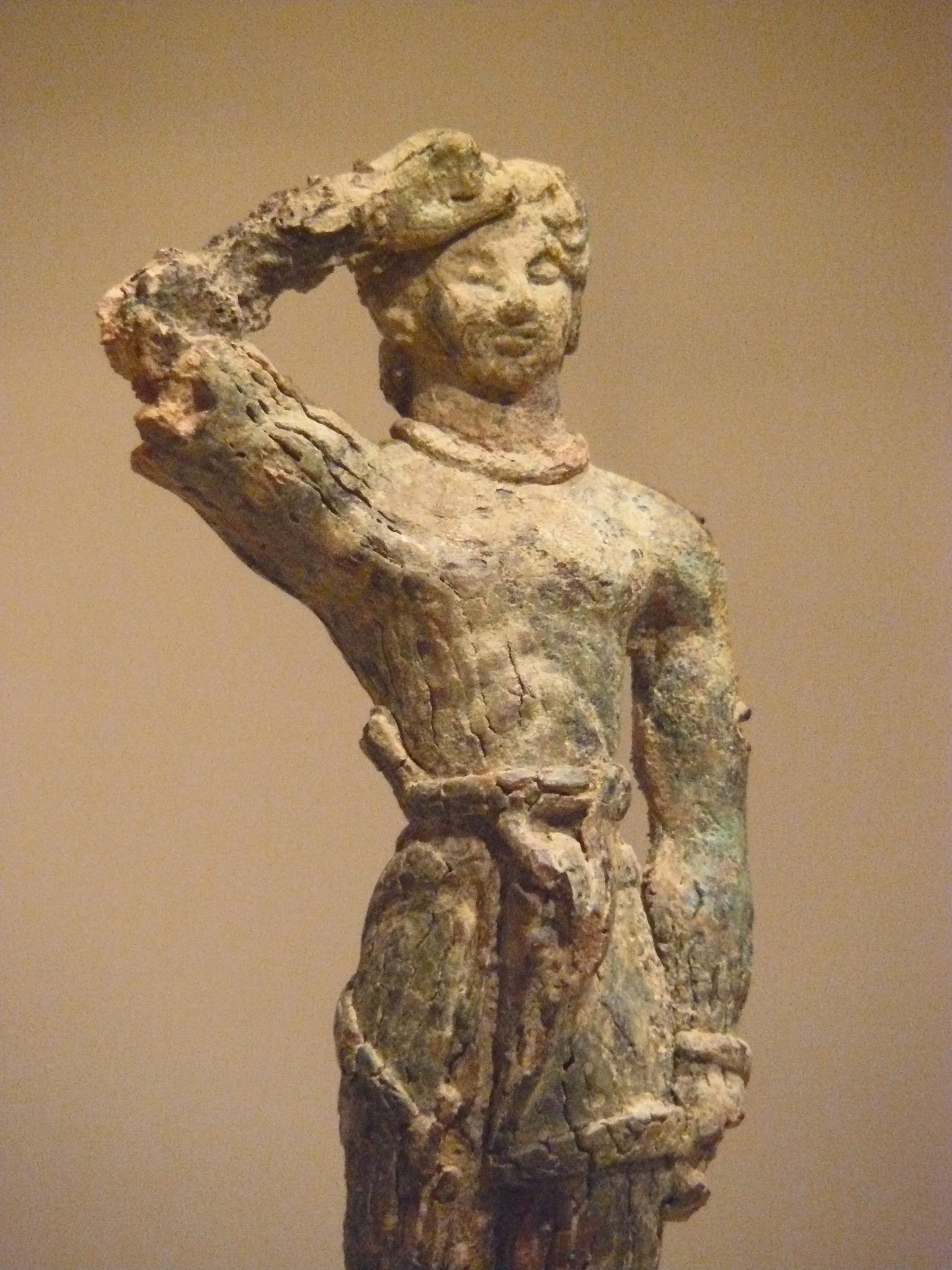
Today we’re going to explore another ecstatic posture, one that appears in Cycladic art from Crete and many other locations around the Aegean.
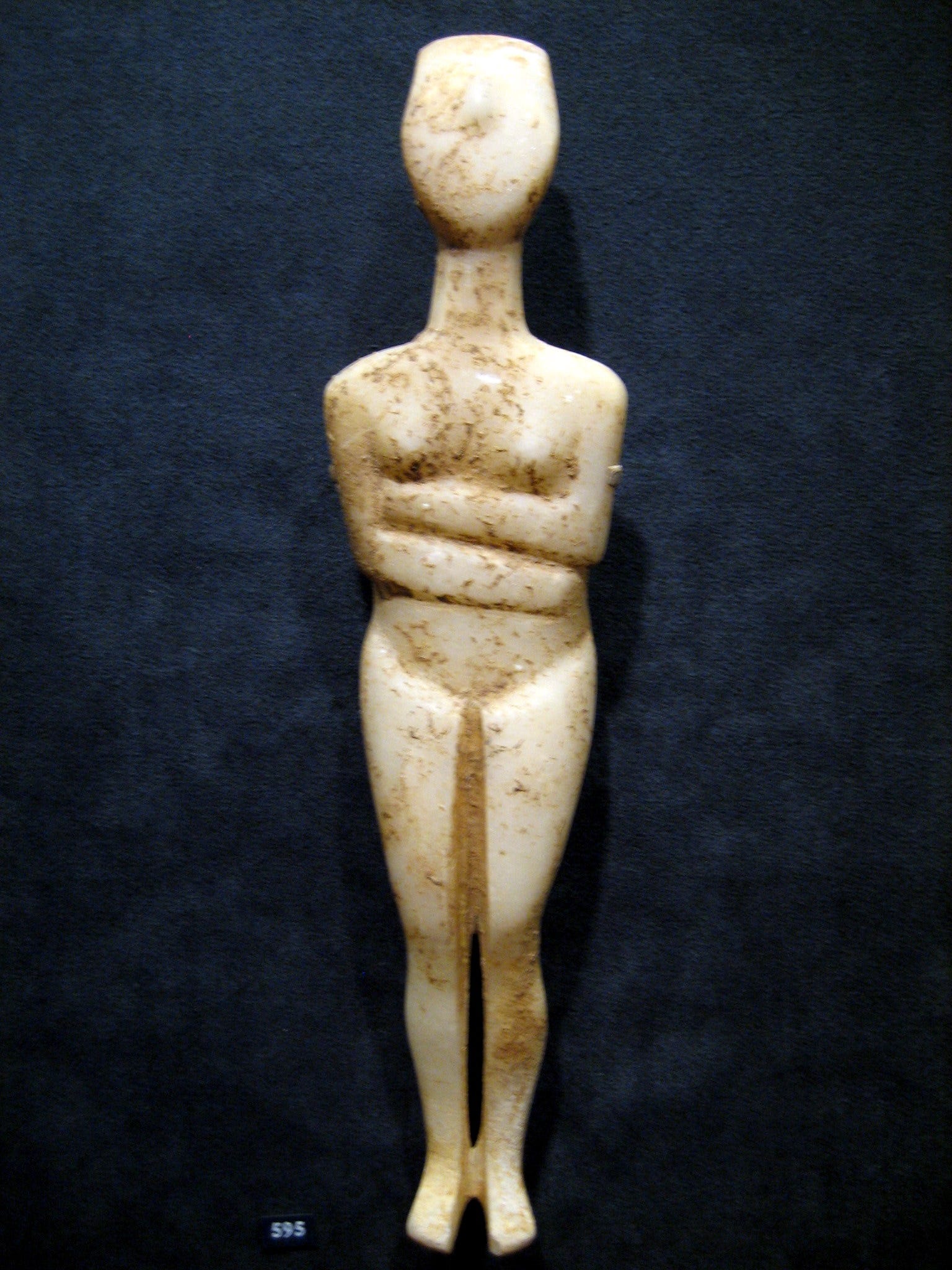
This new posture is called the Realm of the Dead pose. You can see it in the photo at the top of this post, in the form of a white marble figurine.
Archaeologists have unearthed quite a few of these figurines. They’re usually made of white marble, though a few are made of other kinds of white stone. Each one depicts a person (most often a woman, occasionally an intersex person or man) with their upper arms pressed to their sides and their lower arms lying across their abdomen, the left arm above the right. Like most Cycladic figurines, the body is schematized in a way that looks strikingly modern.
Interestingly, some of these figurines have traces of pigment on them, suggesting that they were originally painted red - with red ochre, a substance that has been associated with the dead since the Paleolithic.
Archaeologists think these figurines may represent spirit workers - shamans or human psychopomps - whose job it was to ensure that the spirit of the deceased safely reached the Underworld.
When I initially explored this pose years ago, I performed it standing up, as Belinda Gore suggests in her book Ecstatic Body Postures, a resource I discussed in my first post about ecstatic postures. But I later learned a few things about these figurines that made me question the way she uses the pose in her book.
Gore describes the pose as being done standing up, presumably because that’s the way these figurines are usually displayed in museums. So that’s also how they look in photos, given that the vast majority of photos of them are taken at museum displays.
The thing is, archaeologists believe they were actually designed to lie down, not stand up. They’re almost always found lying down in the graves when they’re discovered.
Have a look at this side view:
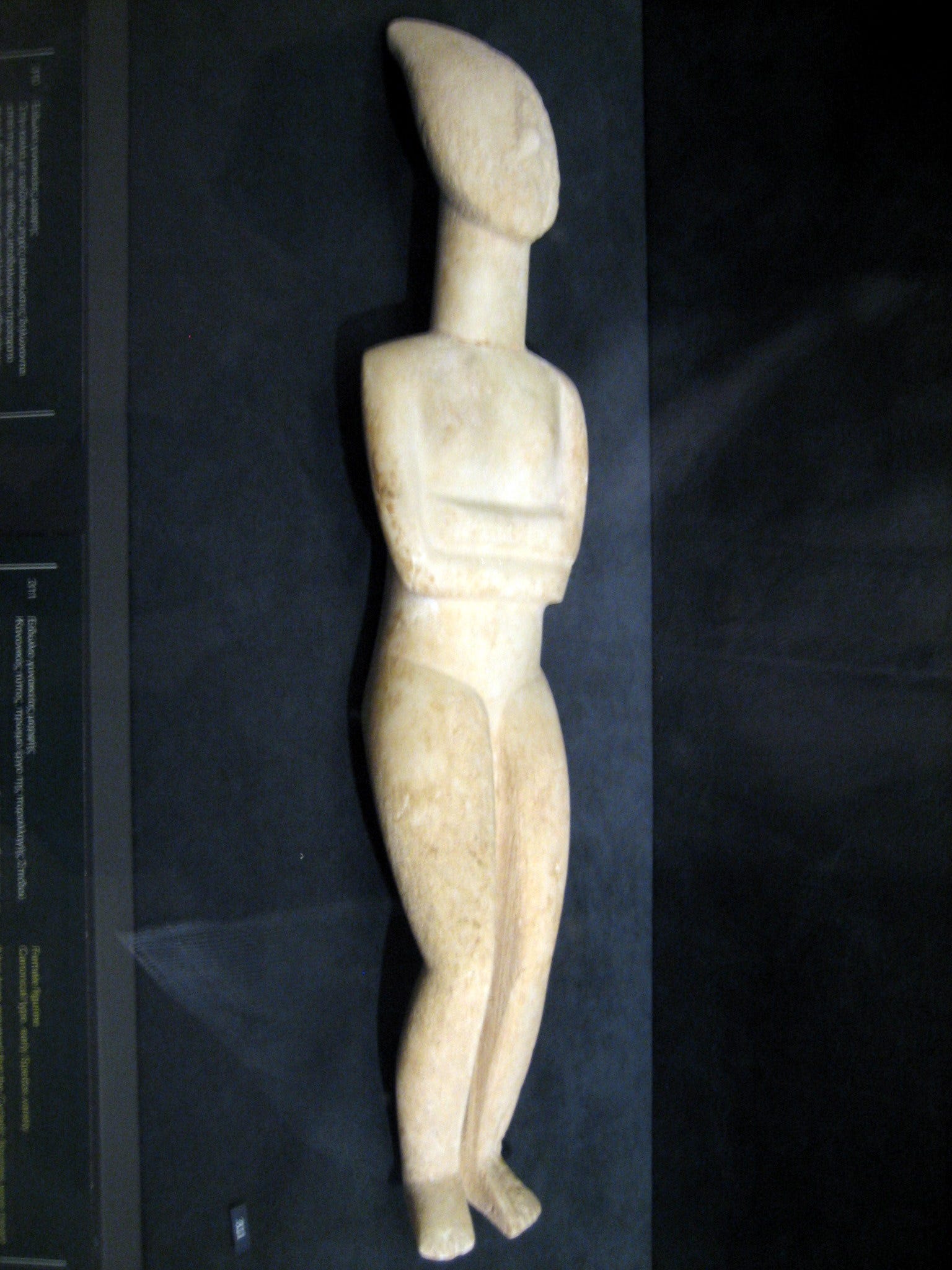
You can clearly see here that the feet are angled so the figurine wouldn’t be able to stand up by itself. The legs are slightly bent and the head is tilted back just a little, the way the human body naturally settles when lying down on a flat surface.
But when I first began working with this posture, I didn’t know any of this. So I followed Gore’s instructions and performed the posture standing up. Now, I did indeed journey to the Realm of the Dead, just like Gore’s book said would happen. The thing is, I couldn’t actually do anything there, couldn’t perform any of the activities I normally undertake as an experienced spirit worker in that realm.
I couldn’t contact the Ancestors; I couldn’t interact with anyone or anything. All I could do was just be present there and observe. But even that became uncomfortable after I had been there a while, as I began to feel that the Dead were drawing me to them and wanted me to stay. No thanks! I had to ask one of my guides to help me leave.
A big part of what we modern people are doing with these ritual postures is experimenting to figure out how they were used all those centuries or millennia ago. That way, we can add them to our modern spiritual toolkit and use them safely and effectively. So I figured, if these statues were originally designed to lie down, then I’d try the pose that way as well. Bingo!
I didn’t fall asleep, which is often a problem for me when I try to meditate or do spirit work lying down. Instead, I journeyed quickly and smoothly to the place in the Otherworld that’s my ‘working spot’ as a psychopomp. Of course, there was no one there, because there was no one in my ‘tribe’ who needed help crossing over right then. But this position took me to the right place with far less effort and concentration than I usually need.
I don’t blame Gore for describing the pose as an upright posture. That’s the way museums tend to display these figurines, and back when she wrote her book, I doubt there was any information available about the positions they were found in during excavation.
This posture works well for both psychopomp work (please use it that way only if you already have training and/or experience with this type of spirit work) and for simply communing with the spirits of the dead. That kind of connection is on a lot of people’s minds this time of year.
If you’re aiming for connecting with the spirits of the dead, I suggest beginning by specifying which spirits you’d like to connect with - perhaps some of your Beloved Dead, or spirit workers among your ancestors, or some other group or individual. Always protect yourself by specifying that you only want to connect with those who are healed and whole. And check out my instructions here for how to prepare yourself to use an ecstatic posture safely and effectively.
As we move into the dark half of the year in the northern hemisphere, this is a good opportunity for those who have an ancestor reverence practice to deepen that connection using this ecstatic posture.
A little bonus content this week: I’ve just added a new video to my YouTube channel. It’s a reading of one of the chapters from Tales from the Labyrinth, my new book of Minoan-themed myths based on our spiritual practice in Ariadne’s Tribe. Enjoy!
I’m not planning to paywall my Substack, but if my work has meaning and value for you, please consider dropping a little something in my tip jar at Ko-Fi. Thank you!
You can find my books here and my art here and here. I do apologize, but due to unpleasant activity from trolls, I’ve had to limit comments to subscribers only. I hope you understand.

About Laura Perry
I'm the founder and Temple Mom of Ariadne's Tribe, a worldwide inclusive Minoan spiritual tradition. I'm also an author, artist, and creator who works magic with words, paint, ink, music, textiles, and herbs. My spiritual practice includes spirit work and herbalism through the lens of lifelong animism. I write Pagan / polytheist / magical non-fiction and fiction across several different subjects and genres. My Minoan entry in the Moon Books Pantheons series is now available (yay!). My book of modern Minoan myths is also now available in paperback, hardcover, and ebook. I do more than just write and make art: I’m also an avid herb and vegetable gardener and living history demonstrator.
I'm excited to find you and your work Laura. I wondered if you'd read "When Spirits Ride the Wind," by F Goodman, ... its an experiential anthropology on certain body postures that help induce specific trance states. Im very interested in these states to access the imaginal and ...lost voices found within it (her) ...all the best
The psychopomp dimension is very interesting. And it is not the only misperception in archaeology that needs respectful correction, thank you!